Arco is a youth football training app we’re building with a Spain-based coaching group. A young player props their phone up on the pitch, runs a structured drill, and the app watches, tracks, and coaches.
What we wanted to find out
Could we turn a real coach’s method into something a kid can follow alone, in the backyard, and still improve?
What we’re building
A coach’s whole curriculum, made playable. Content is a hierarchy: building blocks (dribbling, first touch, shooting, ball mastery, finishing) hold drills, and drills hold levels and steps: around 120 drills across three skill levels. Players follow weekly and monthly plans, gamified in the Duolingo spirit, image- and video-first so a child can use it without reading much. Three modes: a guided session flow, a freestyle mode, and a coach mode where coaches design and assign plans from a web dashboard. A plan stays read-only until its start date, so a player can’t jump ahead.
Under the hood
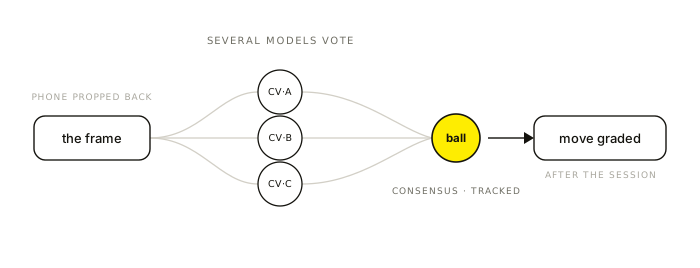
The player records each drill with the phone propped several meters back for a full-body, ball-in-frame view. Ball tracking runs several models that vote, which cuts false positives, and the app auto-detects zones like goals and boxes for the player to confirm. AI feedback runs after the session (phone distance and latency rule out real-time today), with key moments tagged and training clipped by drill for a “Review My Training” playback.The hard part is move recognition: telling an inside-foot strike from laces, or catching a feint or stepover, graded against a difficulty sheet. There’s an immersive touch too: a voice-cloned coach, the partner coach’s own voice, for hands-free guidance.
Where it stands
Active, in heavy design iteration and early internal testing, with first users among the partner coaches and a small set of families.